Project Summary

In time, commercial CO2 capture systems for fossil fuel power plants will be deployed using current and novel solvents (some of these are still under early phase research and development).

This change in power generation technology will inevitably require changes in the way power plants are approved, regulated and monitored. The environmental performance of solvents will influence their commercial and environmental viability.

Since many of these solvents have not been used at this scale on coal and natural gas flue gases it is important that we understand the emissions profiles of different solvent systems. This will not only inform research and development teams, as they trial new solvents, but also environmental monitoring agencies who will need to regulate, approve and monitor emissions. These agencies are accountable to ensure safe and ‘air shed’ suitable emissions targets.

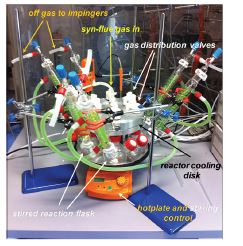
What could potentially enter the environment is highly dependent on the actual solvent. In a controlled laboratory environment, CSIRO tested three Post Combustion Capture solvents, which they exposed to a simulated flue gas. Using similar operating conditions to a potential real world application the solvent and gas stream were then rigorously tested using some of the latest analytical equipment.

The two key solvents studied were:

  • Methyldiethanolamine (MDEA)
  • Piperazine (PZ)

Importantly, in addition to the recommended chemical listing for emissions monitoring, the report concludes that, with the systems and analytical methods developed, amine-based solvent degradation products can be effectively screened and analysed.

What are the chemicals for which monitoring is recommended? For MDEA solvent applications, by far the most important degradation product is diethanolamine (DEA). For the PZ solvent, only two main products were found: ethylenediamine and 2-oxopiperazine. A list of other substances was also recommended to be monitored for both solvents.
Available Reports

Test Procedures for Post-Combustion Capture of Amines

Operation of power plants with amine-based PCC will produce a CO2 depleted flue gas and may introduce new types of pollutant emissions from the amine degradation products. This project integrates the smog chamber work* into in-house dispersion modelling software and simulates the complex degradation process, finding that the degradation products are less of a concern. The 3D dispersion modelling for a hypothetical power station fitted with PCC located in the central coast NSW shows negligible long term health effects. A technical procedure is also developed to identify the degradation products of amines under selected operational conditions.

* The atmospheric chemistry of MEA solvent has been developed through the smog chamber work leading to the formulation of chemical mechanisms. For more information on the smog chamber work please refer to previous report from this project.

Test Procedures for Post-Combustion Capture of Amines - Appendices

  • Appendix A – Experimental conditions for IC-MRM-MS
  • Appendix B – Analysis results of MDEA matrix samples using IC and IC-MRM-MS
  • Appendix C – Results of volatile nitrosamine analysis of MDEA impinger samples completed by AsureQuality, NZ
  • Appendix D – Analysis results of PZ matrix samples using IC-MRM-MS

Process Modelling for Amine-based Post-Combustion Capture Plant

The disposal of waste streams will be significantly larger for post combustion capture processes in a power generation applications. To contextualise the issue, this report undertakes a detailed literature survey on the oxidative and thermal degradation of aqueous amine solvents as observed during laboratory experiments and pilot plant trials. It also reports the likely emissions of these solvents and their degradation products to the atmosphere using publically available information and process simulation software. The emphasis has been given to the amino solvents that are being used at present either commercially or at the technology demonstration scale for post combustion CO2 capture from a black coal-fired power plant flue gas stream. In the absence of commercial scale industry effluent data, this first approximation on emissions is drawn from a modelling approach.

Determining the fate of PCC emissions into the atmosphere

Post combustion capture emissions from amine solvents were the focus of this detailed and technical report as part of an extensive program looking at environmental issues.  To understand the potential air emissions from ‘low emissions’ power plants, both amine degradation mechanisms and the required analytical techniques must be understood. A chemical mechanism was developed for MEA degradation products to assist in atmospheric / regional dispersion modelling.  Overall, the successful implementation of a number of methods (sampling, analytical procedures and instrumental developments) provided both quantitative and qualitative information on a range of amine based products.  Certain aspects of both the sampling and analysis still require further efforts to make them more accurate and robust.

Analysis of environmental legislative and regulatory requirements for amine-based PCC

As part of a larger project which examines the environmental impact of amine-based PCC process in Australia, this study considered how amine-based PCC facilities would be treated under the existing Australian legislation and identified any gaps or barriers that may affect the deployment of the technology in Australia. A range of existing national and international regulatory frameworks are reviewed, under which major industrial developments are approved and operated. Various exposure limits from different sources are compared. It is concluded that specific environmental data relating to PCC will likely be required in order to conduct environmental assessments.

Project Name:
Environmental Impacts of Amine based CO2 Post Combustion Capture (PCC) Process

Research Organisation:
CSIRO

Status:
Completed, 2014

Authors:
Azzi, et al.

Reference:
4-0910-0067

Research Program: Post Combustion Capture
Demonstration: Delta Electricity PCC Plant
Research Focus: Post Combustion Capture, Capture

Back to Project Search

ANLEC R&D
Privacy Overview

This website uses cookies so that we can provide you with the best user experience possible. Cookie information is stored in your browser and performs functions such as recognising you when you return to our website and helping our team to understand which sections of the website you find most interesting and useful.